Innovative Building Technologies - Formwork Technology
Smithsonian's Cooper-Hewitt, National Design Museum - Rockefeller Foundation to showcase the South African designed and patented Innovative Building Technologies and formwork construction technology as an innovative solution to address the unprecedented growth of informal settlements globally, creating employment, developing entrepreneurs and housing the homeless applying new innovative financial structures creating sustainable developments
Fourth Industrial Revolution | Housing Construction The Fourth Industrial Revolution is about empowering people , not the rise of the machines The world will always need human brilliance, human ingenuity and human skills. - Brad Keywell Fourth Industrial Revolution Fourth Industrial Revolution | Housing Construction The inefficiencies of moulding a brick or block in a mould then tasking an artisan to lay them. Then chase the walls for water and electrical services. Then relying on another artisan to plaster the walls. Depending on the skills and ability of artisans to produce a house vs. casting a house in a mould employing unskilled workers – eliminating the need to chase and plaster, in a day, at a known cost. Fourth Industrial Revolution | Housing Construction Fourth Industrial Revolution | Affordable Housing This we refer to as the moladi "injection moulding construction process". Future of Construction - World Economic Forum Molding or Moulding ...
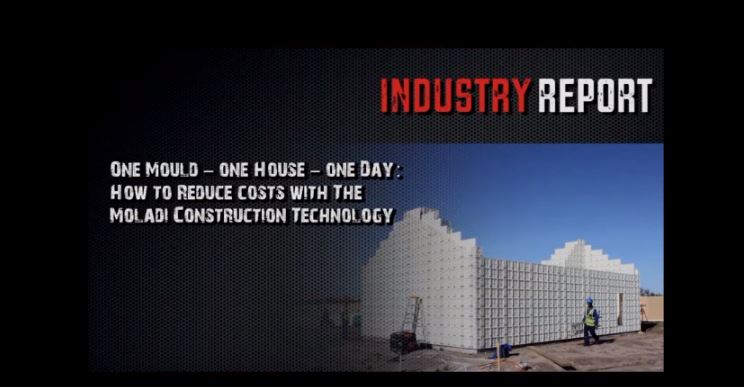
Cast in place construction method Cast in place construction method - moladi Cast-In-Place (CIP) concrete is a building construction method where locally supplied ready mix concrete or site mix mortar (concrete without stone or coarse aggregate), steel reinforcement and plastic formwork are delivered to the construction site and production of concrete and mortar structures takes place on location or insitu. moladi , an award winning South African based company, established in 1986, makes low cost housing accessible to low-income people through innovative and eco-friendly technology, creating employment. The moladi Low Cost Housing System consists of a reusable and recyclable plastic formwork mold, which is filled with stone-less concrete and a special concrete additive. This additive ensures that, once the mortar is set, the formwork can be removed - and reused up to 50 times. The brick-less walls can withstand all types of weather and is earthquake and hurricane resistan...
Future of Construction - moladi Future of Construction - World Economic Forum - Case Study - moladi Strong population growth in many developing and emerging countries and mass urbanization – an estimated 40,000 people moving into African cities every day – create a strong demand for affordable housing. Beyond housing, many developing countries are lagging behind in access to social infrastructure and public services such as schools, hospitals or the justice system. Consider Tanzania: the country faces a shortage of 3,115 courtrooms. Moladi Construction System aims to address that magnificent challenge by providing a scalable, low-tech and low-skilled affordable building solution using in-situ casting. Founded in 1986 by South African social entrepreneur Hennie Botes, the company aims to replace the classic brick-and-mortar construction with an easier method: using lightweight, removable and re-usable plastic formwork that are filled with a patented fast setting aerated mor...


Comments
Post a Comment